
Creases and Vectors
and Inversion
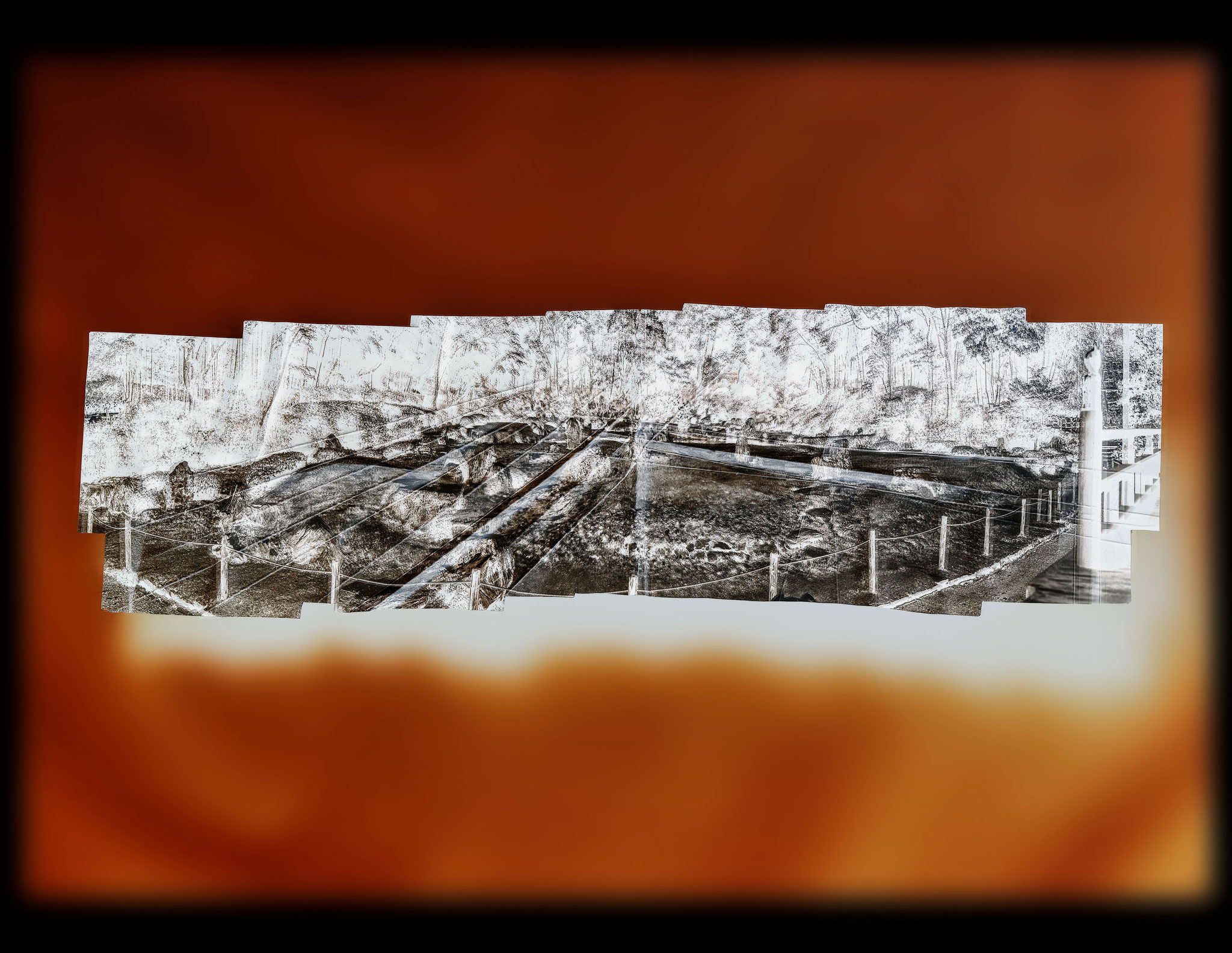

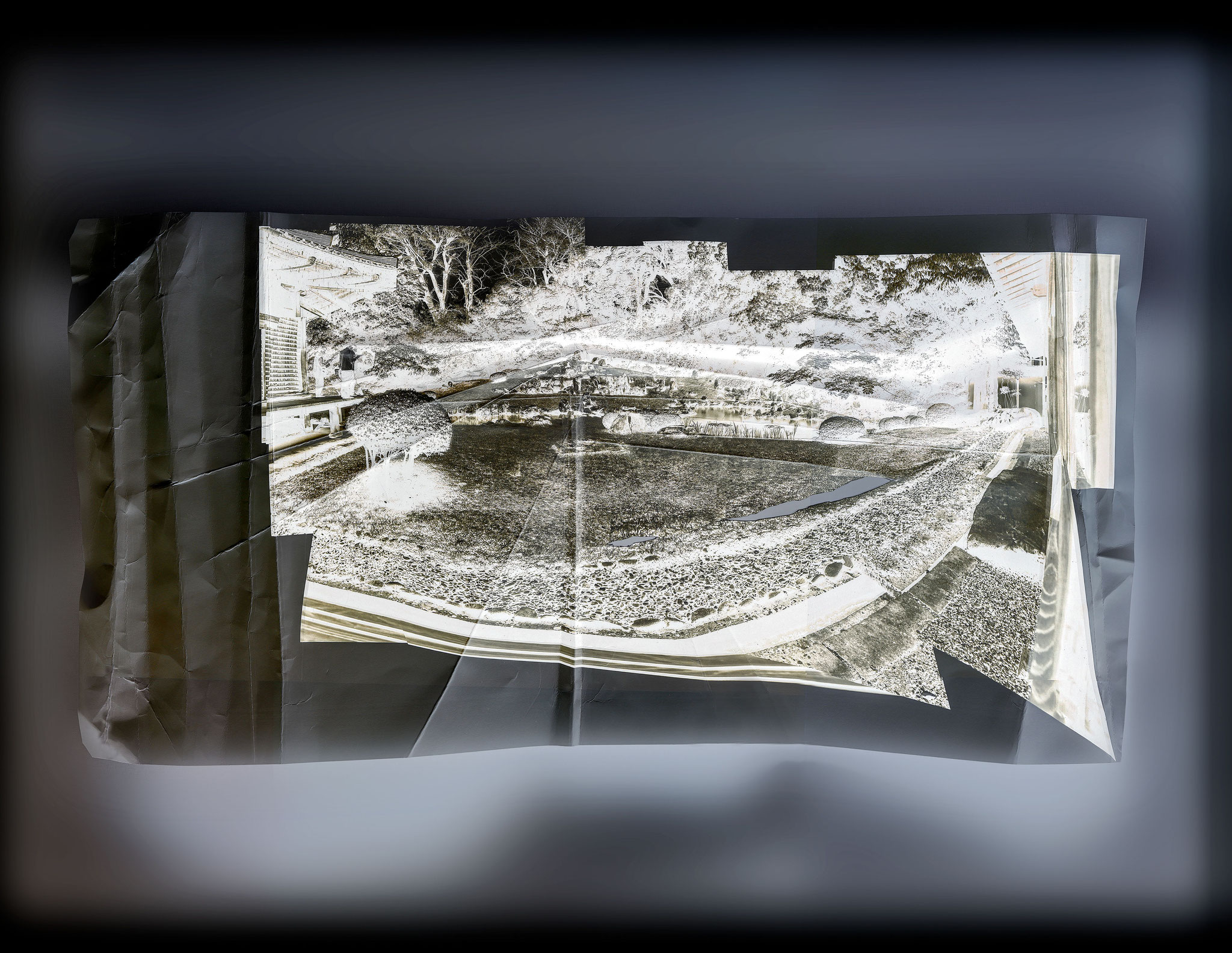
雪舟の庭は、「量と方向」によって構成されている。
石の配置や動線は、視線をある一点へと導いていく。
その構造は感得できる。
しかし同時に、それは単一の視点へと収束させる装置でもある。
では、その視点は誰のものなのか。
構造を理解できたとしても、その位置は自らの場所として感得されているのか。
だからこそ、誘導された視線の運動を一度折る。
そして反転させる。
写真に折り目を入れることは、像を傷つけるためではない。
視線が表面に触れる地点に、物理的な痕跡を刻むためである。
反転は否定ではない。
像を前景から退かせ、イメージを確定した対象として安定させないための操作である。
それは、説明してしまう力を一度手放すことでもある。
庭はそこにある。
見るとは、与えられた位置に従うことではない。
自らの場所を立ち上げることである。
Sesshū’s garden is structured through quantity and direction.
Stones and spatial vectors guide the eye toward a converging point.
Its structure can be perceived.
Yet this very structure also directs the viewer toward a singular position.
But whose position is it?
Even when the system is understood, is that position sensed as one’s own place?
To fold the photograph is not to damage the image.
It is to inscribe a physical trace at the point where perception meets surface.
The inversion follows —
not as negation, but as displacement.
It moves the image away from the foreground so that it does not settle into certainty.
It is also a way of suspending the image’s power to explain itself.
The garden remains.
To see is not to obey a given position.
It is to bring one’s own place into being.